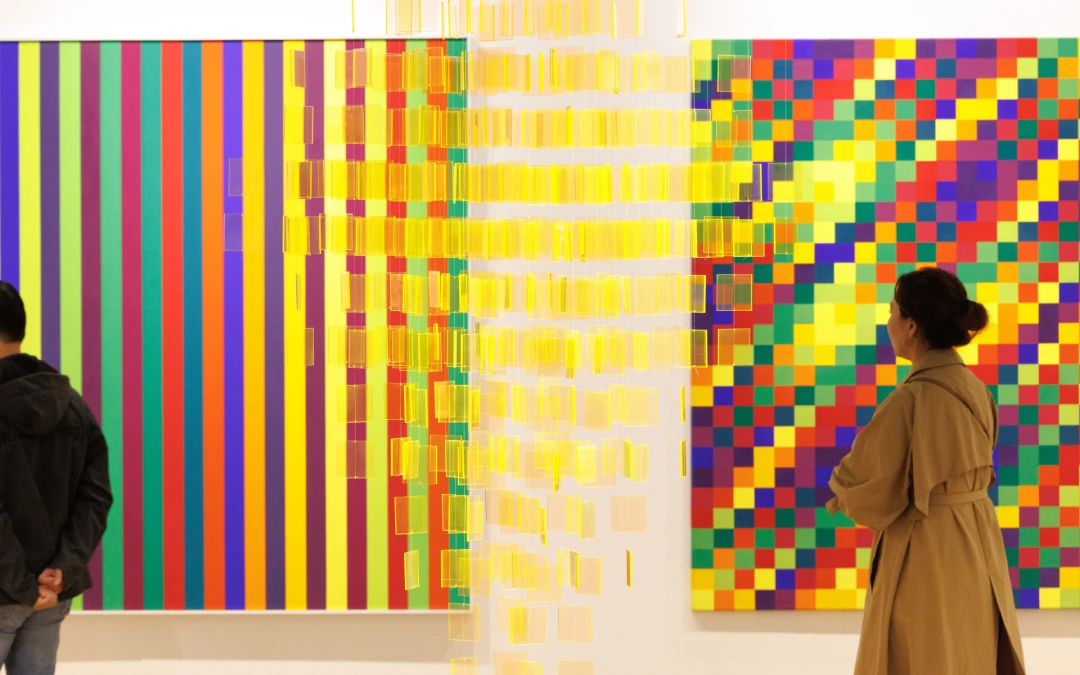
From Chuang Che’s 1960 ink experiments drifting between abstraction and landscape, to Huang Yuxing’s electrified, data-driven subterranean universe, these twelve remarkable works trace a spectrum of creativity that spans generations and geographies. Rooted at times in personal trauma and bodily narratives, and at others anticipating the deep convergence between technology and the human form, they collectively point to a singular reality: within the Hong Kong fair, contemporary art asserts itself through multiplicity and bold experimentation—extending an irresistible invitation to every viewer.
Pipilotti Rist
Sophie, The Enlightened Granddaughter (2025)
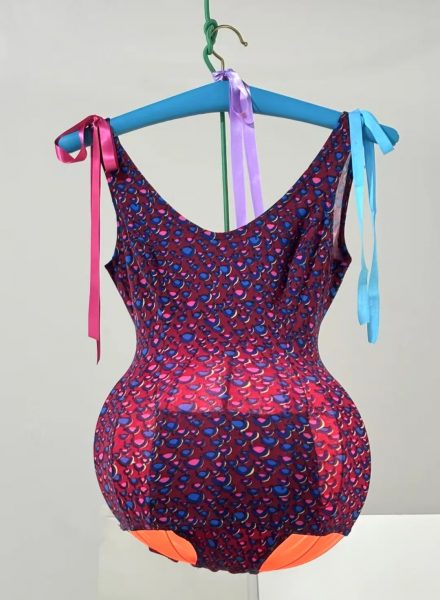
Pipilotti Rist’s luminous sculpture Sophie, The Enlightened Granddaughter (2025) is built upon a woman’s swimsuit stretched over a lampshade and adorned with shimmering ribbons. It evokes a character from the Swiss artist’s immersive visual universe—vivid, ethereal, and playfully irreverent.
Renowned for her sensory environments of light and sound, Rist here transforms an everyday object into a whimsical anthropomorphic presence.
Haegue Yang
Sonic Fabric over Brass Plated Web (2015)
One of Korea’s most acclaimed contemporary artists, Haegue Yang transforms industrial materials—Venetian blinds, drying racks, metal frameworks—into intricate spatial compositions.
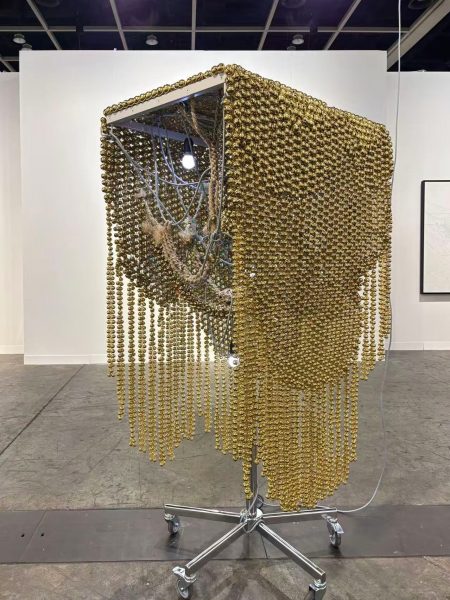
In this work, hundreds of small brass bells hang from a metal structure, forming what the title suggests: a shimmering “sonic fabric.” Mounted on wheels and interwoven with wires and light bulbs, the sculpture feels as if a passing breeze could set it gently ringing.
Sopheap Pich
Stalk 4 (2025)
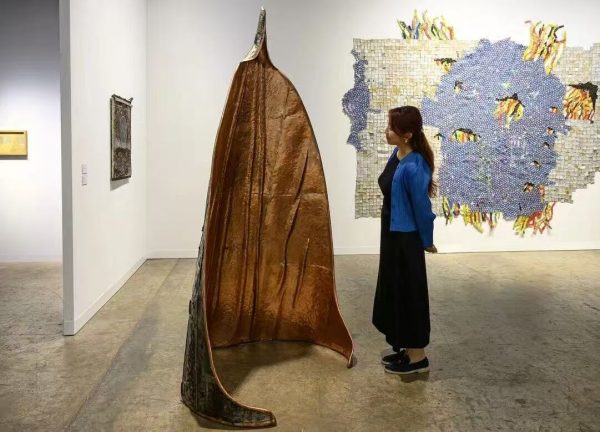
After returning to Cambodia in 2003, Sopheap Pich shifted from painting to sculpture, working with local materials such as bamboo, rattan, burlap, beeswax, and metal.
Stalk 4 (2025), made of aluminum and copper, rises in a narrowing curve reminiscent of a bamboo shoot—reflecting the artist’s ongoing exploration of organic forms like seeds, pods, and growth.
Chuang Che
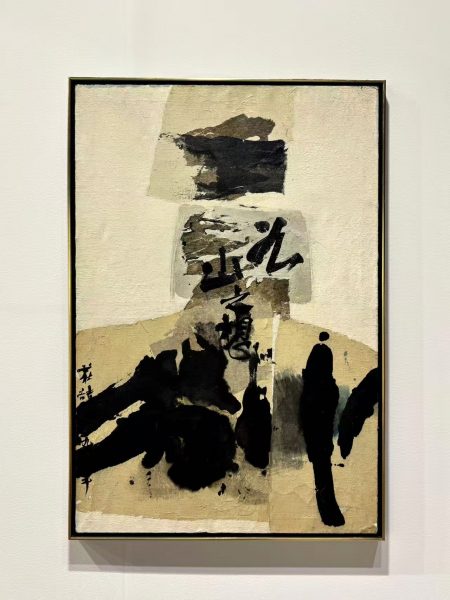
As Lofty as a Mountain (1960)
Created during a pivotal moment when artists sought to redefine Chinese painting, Chuang Che—alongside the Fifth Moon Group—introduced Western abstraction into dialogue with ink traditions.
This work hovers between landscape and abstraction: washes and gestural strokes suggest mountainous forms without ever rendering them explicitly.